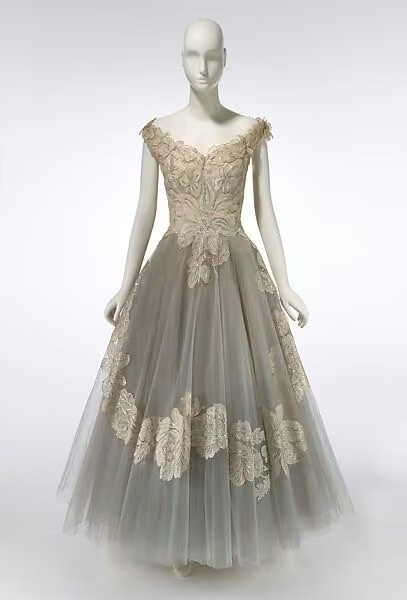
Evening dress
Ann Lowe · ca. 1960
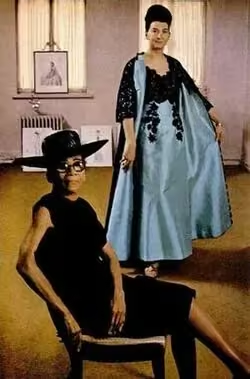
Ann Lowe built formal gowns from the inside out, joining carefully engineered support to delicate floral handwork. Her custom dressmaking was central to American society dressing even when its maker was denied equal recognition.
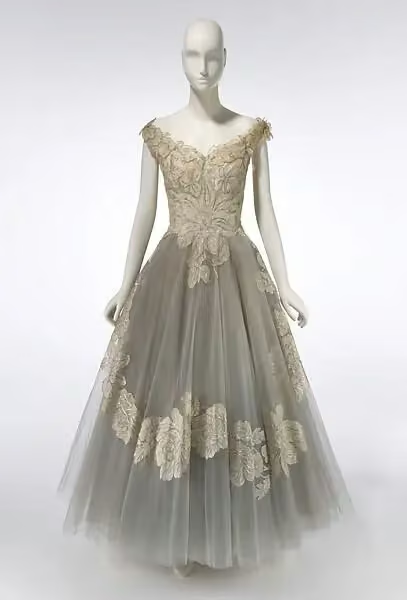
Collection selection
ca. 1960
A fitted, embellished bodice opens into a full gray skirt. Pale decorative bands continue across the skirt, linking its airy outer layers to the densely ornamented top. The Met records nylon, metallic thread and silk.
The Metropolitan Museum of Art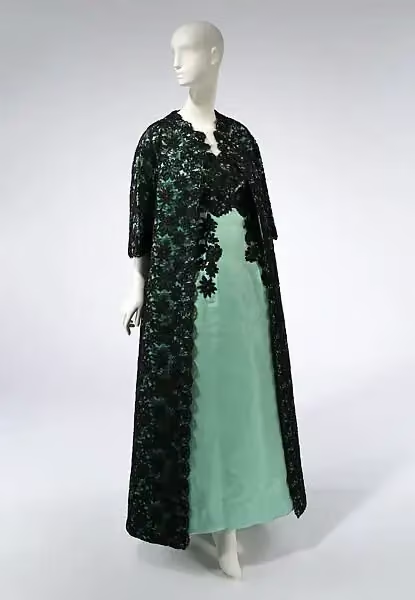
Collection selection
ca. 1966 · The Met collection
Silk, cotton.
The Metropolitan Museum of Art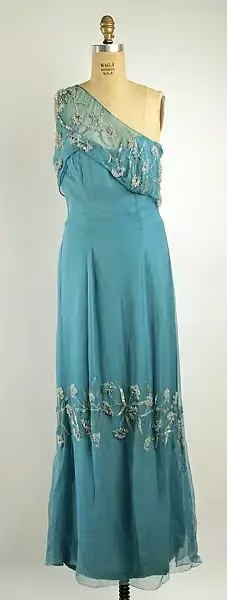
Collection selection
ca. 1968 · The Met collection
Silk.
The Metropolitan Museum of Art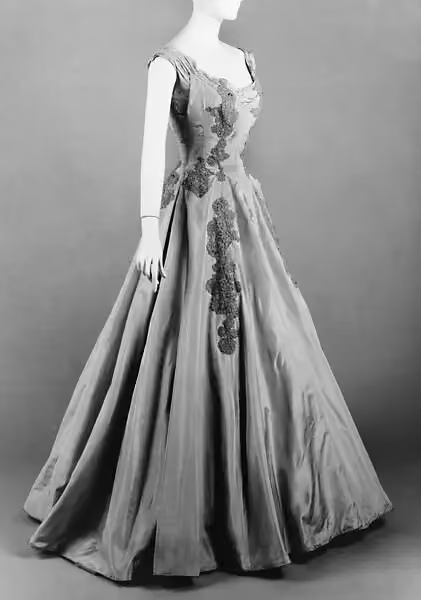
Collection selection
1956 · The Met collection
Silk, cotton, glass, synthetic fiber.
The Metropolitan Museum of Art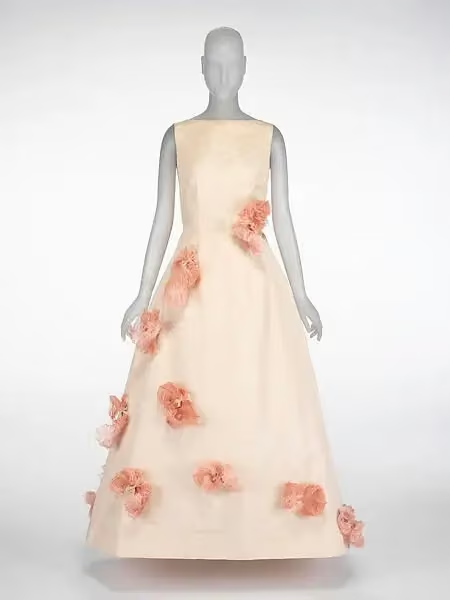
Collection selection
1964 · The Met collection
Silk, ostrich feathers.
The Metropolitan Museum of Art1 piece · Season not recorded
Ann Lowe · ca. 1960
Lowe learned dressmaking from her mother and grandmother. Her mature gowns could contain inset bustiers, padding and waist stays beneath elaborate surfaces: the interior gave their full skirts and fitted bodices a controlled line. Flowers were part of a highly skilled decorative practice, not a substitute for construction.
She designed Jacqueline Bouvier Kennedy’s wedding dress in 1953. A pipe burst in her workroom ten days before the wedding, forcing her to remake ten gowns, including the bride’s, at a loss. She received no public press credit as the designer at the time. Racial exclusion also affected the business itself: the Met’s account explains that white financial partners helped make renting an elite New York salon possible for a Black woman.