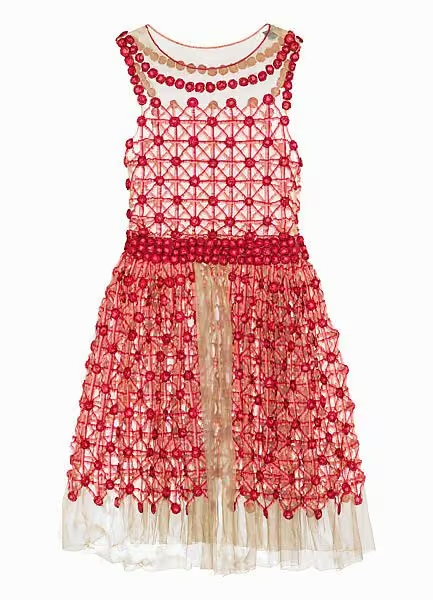
Roseraie
Jeanne Lanvin · spring/summer 1923
Jeanne Lanvin began in millinery before expanding into dressmaking, encouraged by clients who admired the clothes she made for her daughter. Her robe de style became a signature of 1920s couture.
Official house website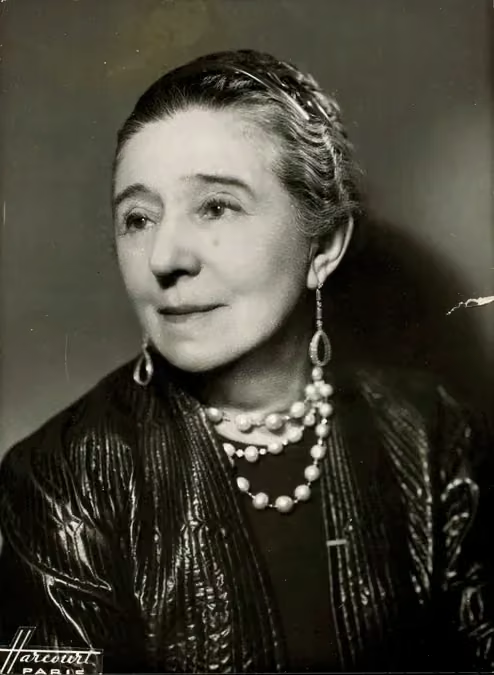
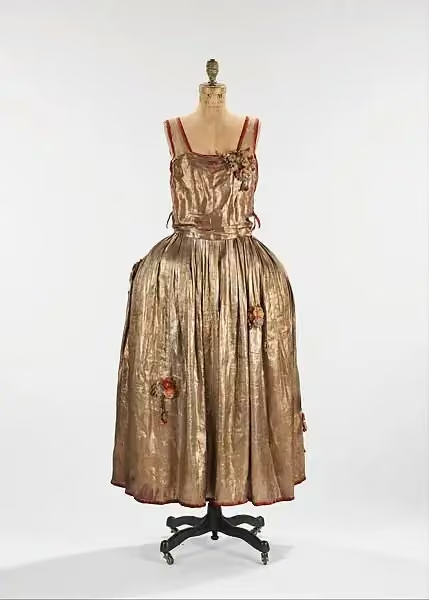
Landmark design
1922
A full skirt and scattered velvet flowers transform historical dress into a modern robe de style, Lanvin’s distinctive alternative to the straight 1920s silhouette.
The Metropolitan Museum of Art
Landmark design
spring/summer 1923
Ribbon flowers form an ordered lattice, connecting Lanvin’s decorative couture with the floral language of the Mackintoshes.
The Metropolitan Museum of Art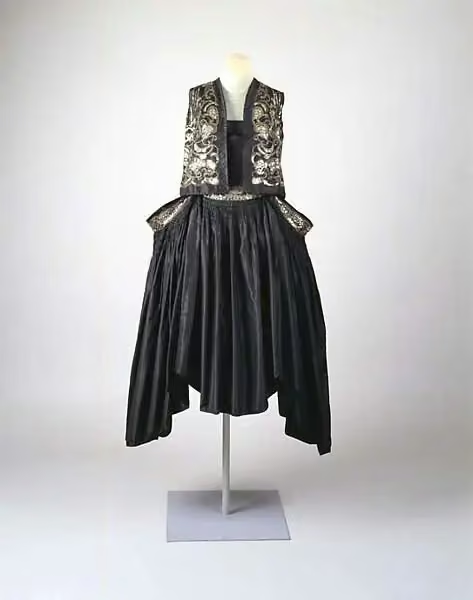
Landmark design
Summer 1927
The embellished vest and full skirt show how Lanvin combined the robe de style with the period’s fascination with Chinese decorative motifs.
The Metropolitan Museum of Art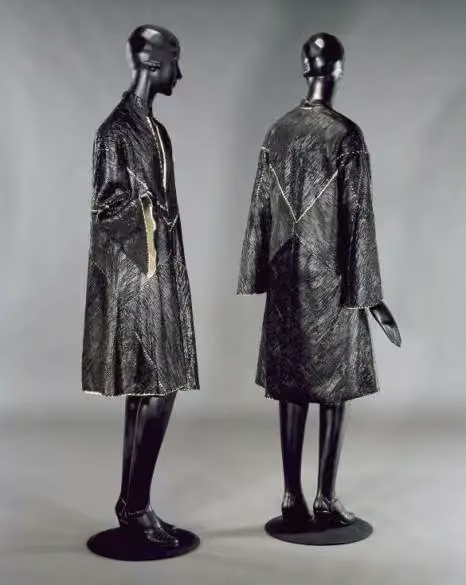
Landmark design
Summer 1928
Black waxed cord covers cream silk in geometric patterns, turning the coat into a striking example of Lanvin’s elaborate Art Deco surface work.
Paris Musées / Palais Galliera, musée de la Mode de la Ville de Paris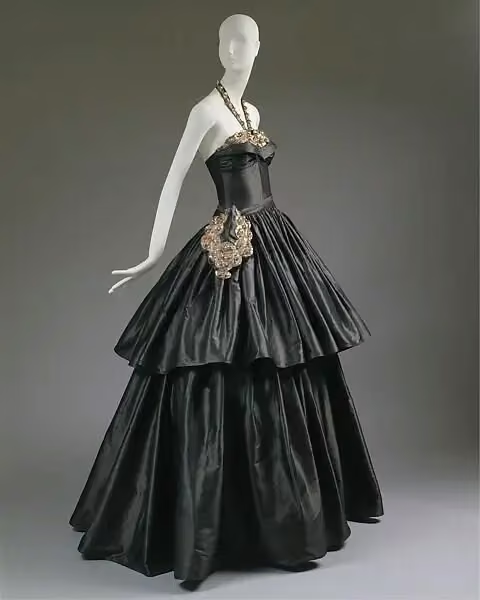
Landmark design
1939
Made for Lanvin’s daughter, the dramatic gown shows the house’s advanced couture workmanship on the eve of the Second World War.
The Metropolitan Museum of Art1 piece
Jeanne Lanvin · spring/summer 1923
1 piece
Jeanne Lanvin · Summer 1927
Wide skirts, careful embellishment and distinctive color offered a romantic interpretation of modern dress, while her business grew across several design fields.
READ FURTHER
The Met: Lanvin, Robe de Style, 1926