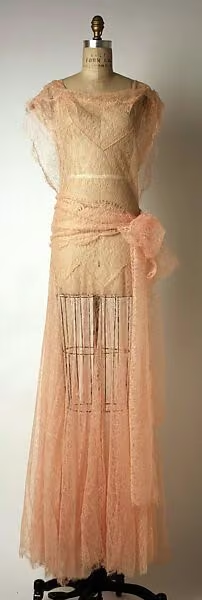
Evening dress
John Galliano · spring/summer 1999
John Galliano recombined historical dressmaking ideas into expressive contemporary fashion. The Met connects his streamlined lace eveningwear to Madeleine Vionnet and his spiraling Dior taffeta gown to 1930s silhouettes and René Gruau’s illustrations.
Collection selection
spring/summer 1999
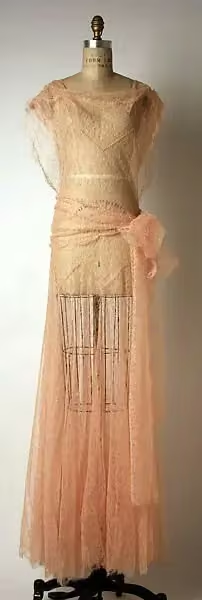
Galliano drew on the streamlined dresses of Madeleine Vionnet, shaping this transparent lace garment with relatively few darts and seams. The Met emphasizes how its body-skimming construction recalls the 1920s and 1930s. Omitting an opaque slip makes that historical reference more revealing, transforming an earlier eveningwear vocabulary through exposure.
The Metropolitan Museum of Art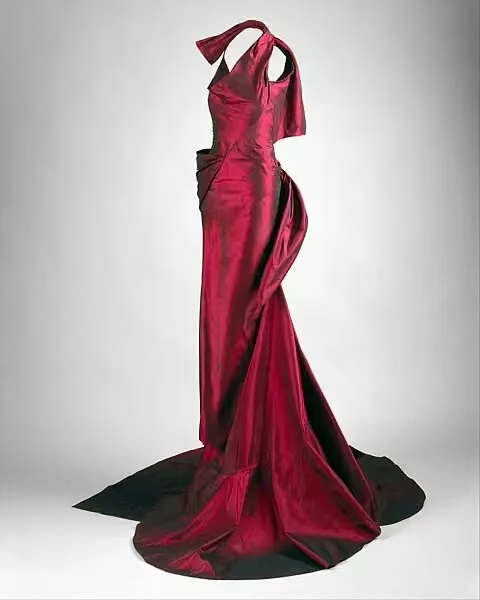
Collection selection
Hobo collection · spring/summer 2000
Four parallel panels of changeable silk taffeta spiral from neckline to train, each panel longer than the last. Cut on the bias, they cling to the body before projecting outward. The Met connects this Dior gown to both 1930s silhouettes and René Gruau’s dynamic fashion illustrations of the 1950s.
The Metropolitan Museum of Art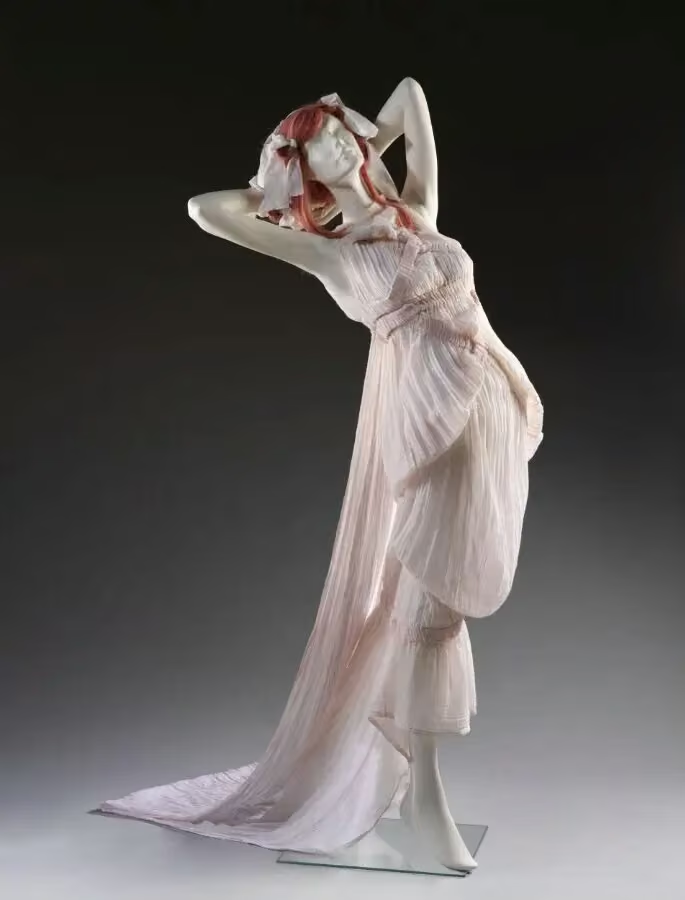
Collection selection
1985-86 · V&A collection
Cotton muslin.
© Victoria and Albert Museum, London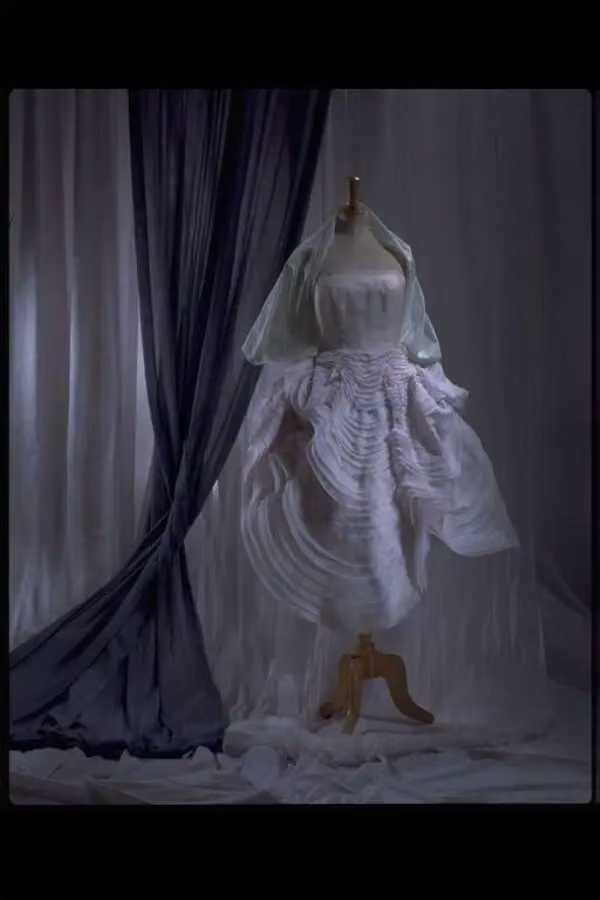
Collection selection
1987-88 · V&A collection
Bias cut organdie with a boned bodice and cotton sash.
© Victoria and Albert Museum, London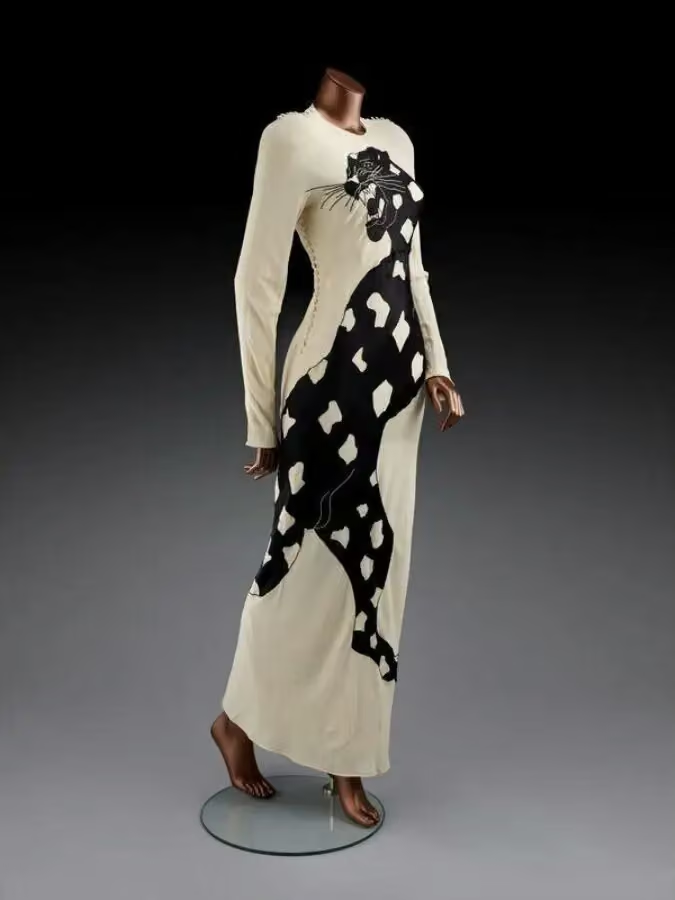
Collection selection
late 1996 · V&A collection
intarsia work on satin-back crêpe .
© Victoria and Albert Museum, London1 piece
John Galliano · spring/summer 1999
1 piece
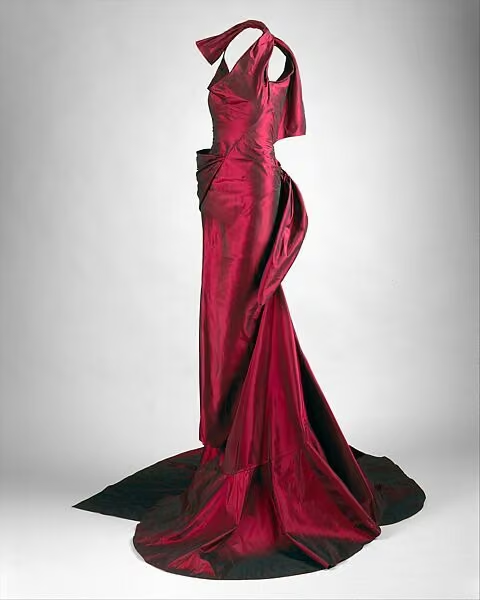
John Galliano · spring/summer 2000
In these garments, the cut and motion of fabric carry the historical reference, allowing an earlier visual language to become a new theatrical silhouette.