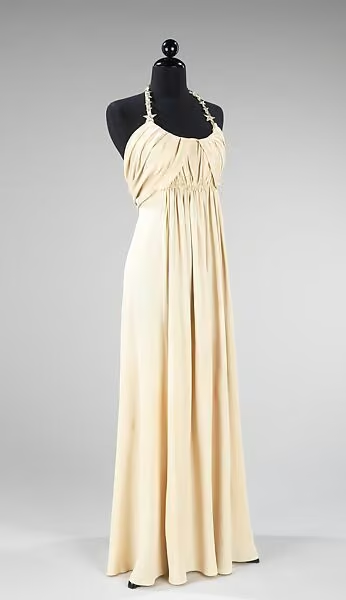
Evening dress
Madeleine Vionnet · Spring/Summer 1932
Madeleine Vionnet made geometry move. Her dresses use the behavior of cloth to follow the wearer, turning complex cutting into an impression of effortless drape.
Collection selection
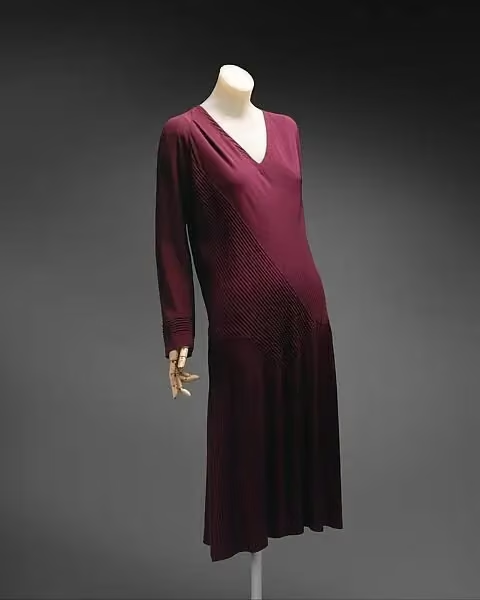
1926–27
A grid of pintucks acts as ornament and structure, revealing the geometric precision beneath Vionnet’s apparently effortless shapes.
The Metropolitan Museum of Art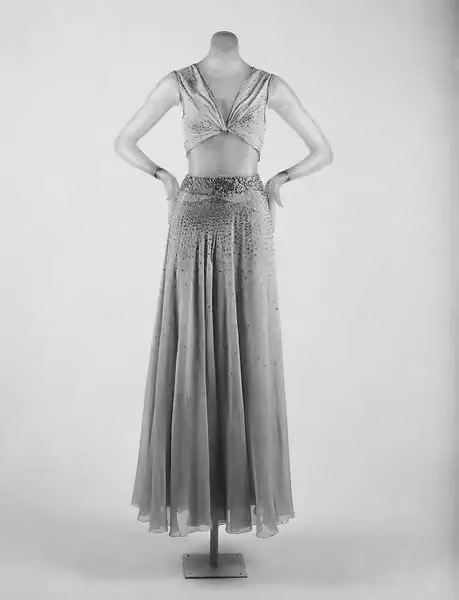
Collection selection
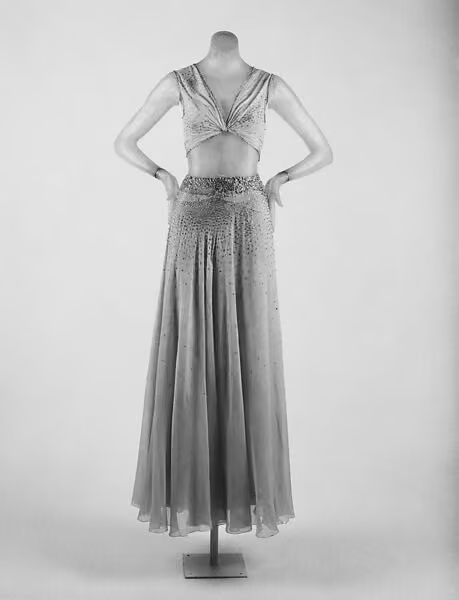
Spring/Summer 1932
The exposed midriff and rhinestone embroidery show Vionnet exploring unexpected placements of transparency and light within an evening silhouette.
The Metropolitan Museum of Art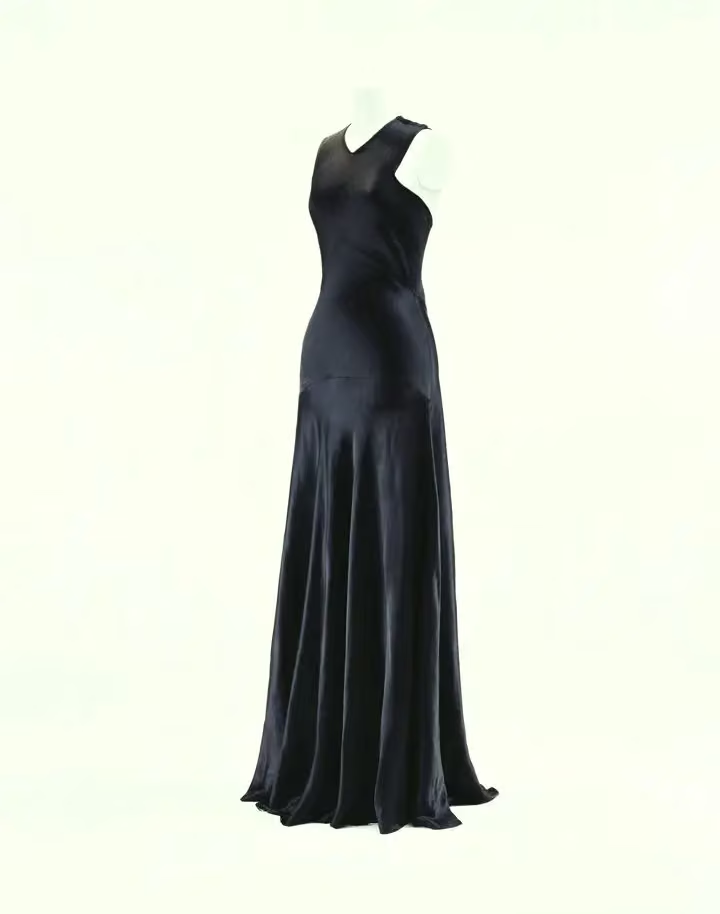
Collection selection
1932
Carefully calculated bias-cut panels account for different rates of stretch, allowing satin to follow the body with minimal visible structure.
© The Kyoto Costume Institute, photo by Takashi Hatakeyama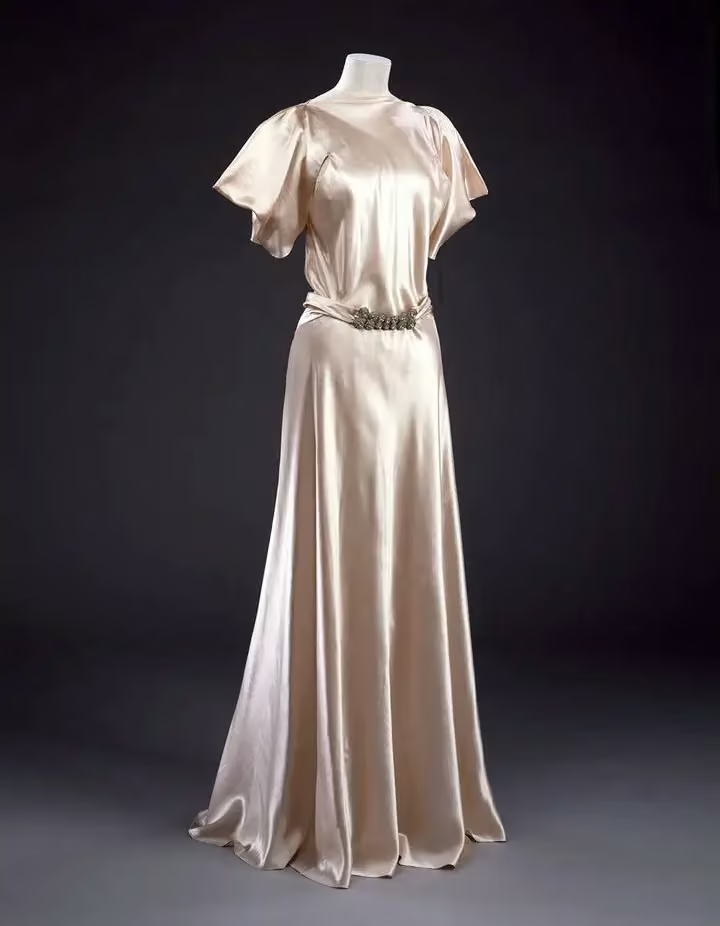
Collection selection
1932–34
The satin follows the body in long, fluid folds, demonstrating the softly sculpted silhouette made possible by Vionnet’s bias cutting.
© Victoria and Albert Museum, London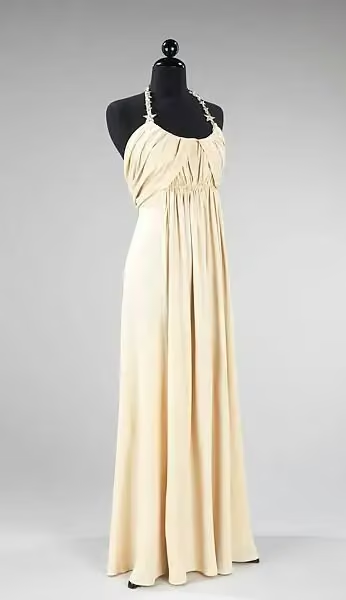
Collection selection
1938
A bias-cut cowl at the back and a curved front seam translate classical drapery into precise modern dressmaking.
The Metropolitan Museum of Art1 piece
Madeleine Vionnet · Spring/Summer 1932
1 piece · Season not recorded
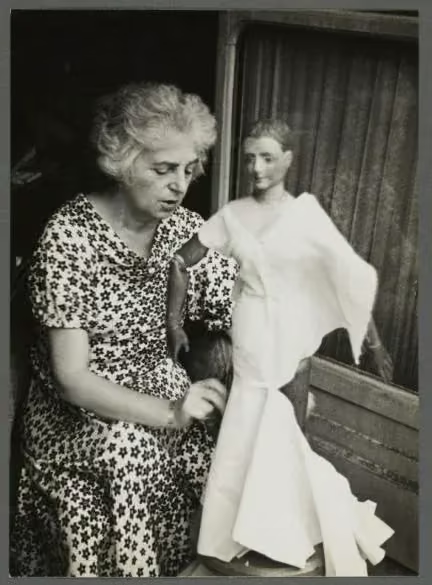
Vionnet opened her Paris couture house in 1912. She became closely associated with bias cutting: placing pattern pieces diagonally across the weave, where woven cloth has more natural give than it does along its straight threads. That flexibility allows a dress to settle around the body and respond to movement. Its apparent simplicity depends on precise proportions and careful finishing.
Her attention to how a couture house worked also reached the people making its clothes. Employees received paid holidays and maternity leave, with an on-site doctor, dentist and canteen. These provisions make the often general claim that she improved working conditions concrete, alongside the technical innovations for which she is remembered.
READ FURTHER
V&A: Madeleine Vionnet, an introduction