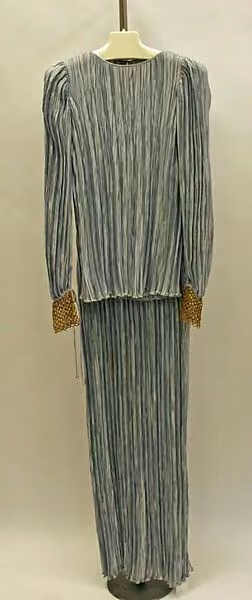
Evening dress
Mary McFadden · 1978
Evening dress — 1978
New York, United States
Mary McFadden translated her study of historical textiles and global art into a distinctive language of American eveningwear. Her signature Marii pleating created fluid columns, while quilted jackets, beaded details and embroidery brought richly worked surfaces into the same wardrobe.
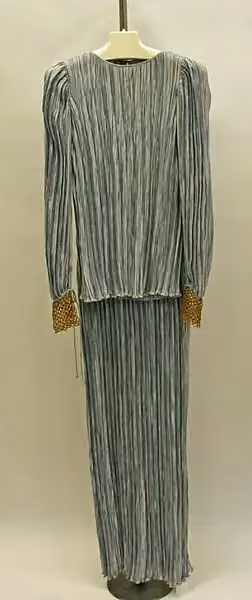
Collection selection
1978
The Met dates this evening dress to 1978 and records silk and cotton. It offers a 1970s counterpart to McFadden’s later pleated column dress, showing the variety of textiles within her eveningwear. No collection theme is documented for this specific object.
The Metropolitan Museum of Art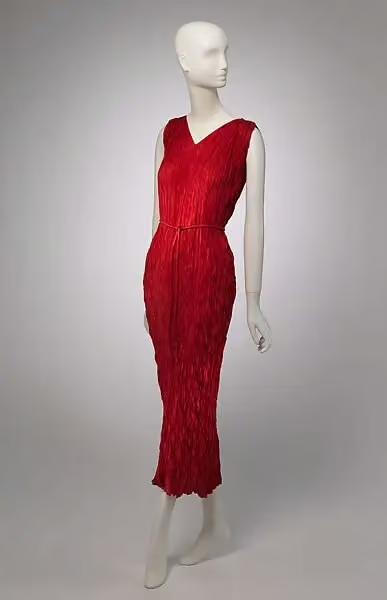
Collection selection
Ca. 1990
McFadden’s Marii pleating transforms polyester into a fluid column. The Met relates the relaxed shape to Greek chitons and Japanese kimono, and describes a textile process involving Australian synthetic charmeuse, dyeing in Japan and machine pressing in the United States.
The Metropolitan Museum of Art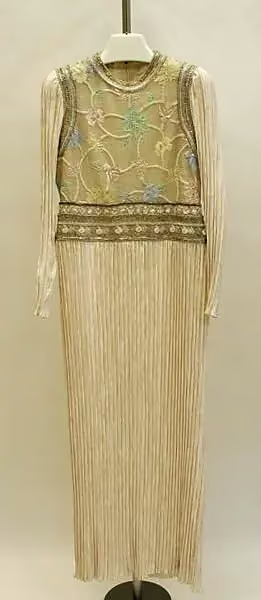
Collection selection
1983–87 · The Met collection
Synthetic fiber, glass, metallic thread.
The Metropolitan Museum of Art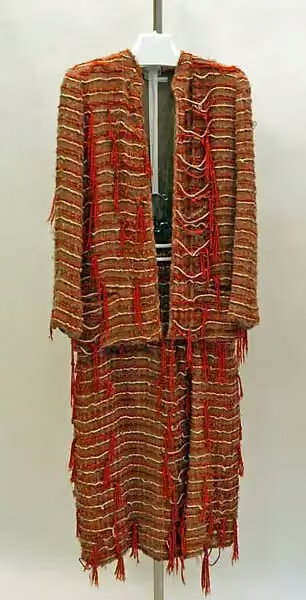
Collection selection
ca. 1978 · The Met collection
Silk, wool.
The Metropolitan Museum of Art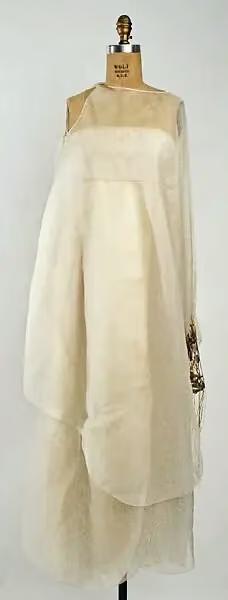
Collection selection
1979 · The Met collection
Silk, metallic thread, plastic.
The Metropolitan Museum of Art1 piece · Season not recorded
Mary McFadden · 1978
Evening dress — 1978
1 piece · Season not recorded
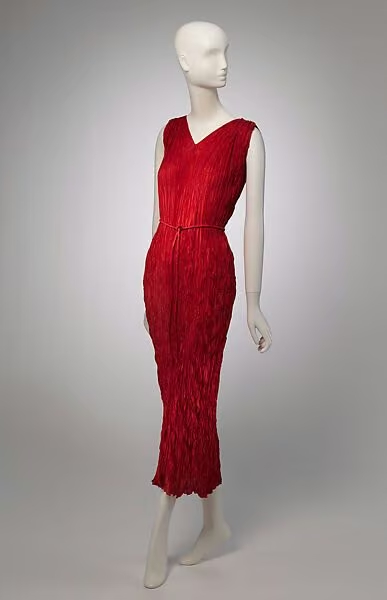
Mary McFadden · ca. 1990
Pleated column dress — ca. 1990
References ranged from ancient Greece and China to Indian embroidery traditions. After presenting her first New York collection in 1973, she became a prominent independent designer and served as the CFDA’s first female president in 1982. Her clothing makes historical revival visible through textile technique as much as silhouette.