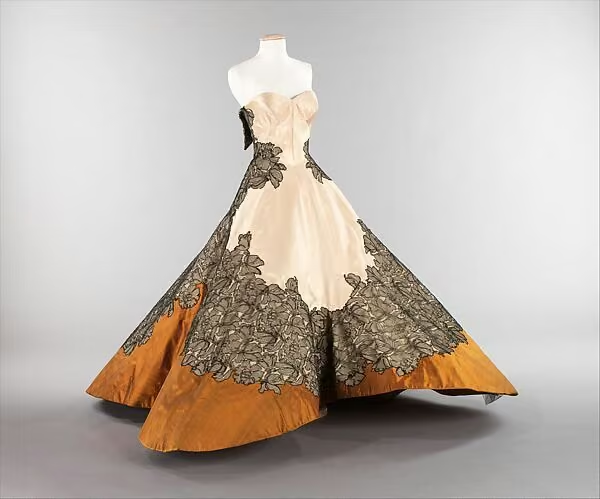
Clover Leaf
Charles James · 1953
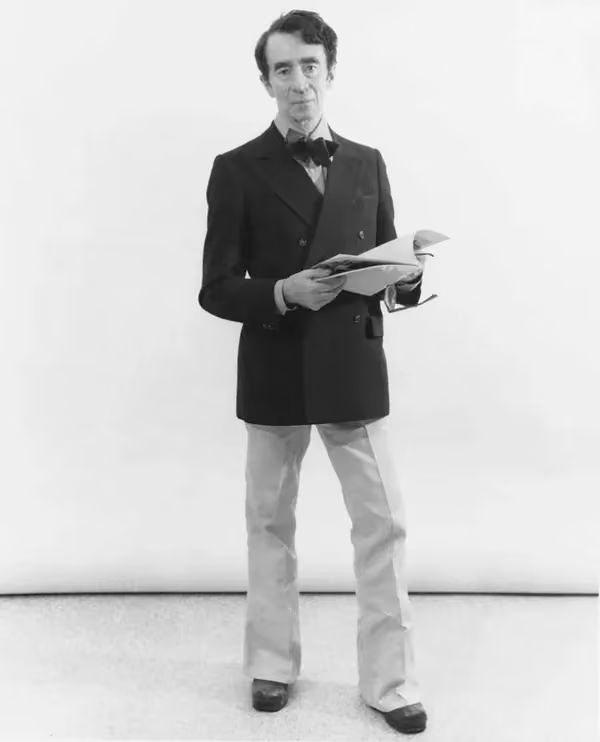
Charles James approached dressmaking through the close study of shape, structure and the behavior of fabric. His work reached particular prominence from the late 1940s through the mid-1950s.
Landmark design
1953
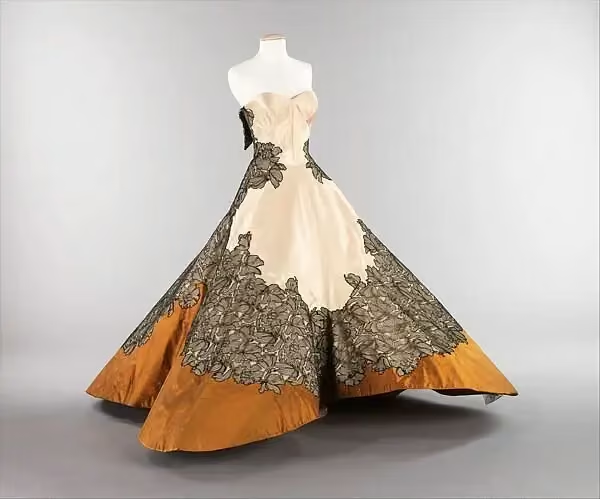
Four unequal lobes form the skirt’s clover-like perimeter, making this gown a landmark of James’s geometric approach to dress.
The Metropolitan Museum of Art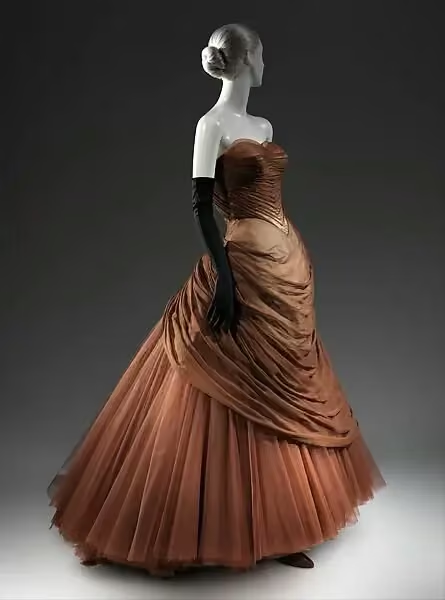
Landmark design
ca. 1954
Layered colored tulle gives a substantial, bustle-like skirt an appearance of airy depth, a signature James experiment in volume and optical color.
The Metropolitan Museum of Art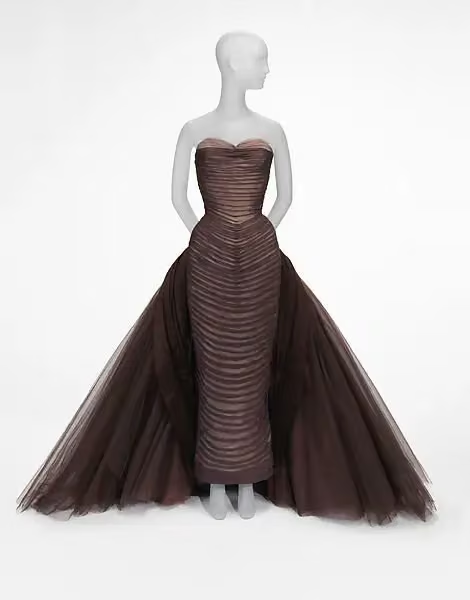
Landmark design
ca. 1955
A long fitted torso opens into a large sweep of layered tulle at the back, turning the gown’s movement and color into part of its construction.
The Metropolitan Museum of Art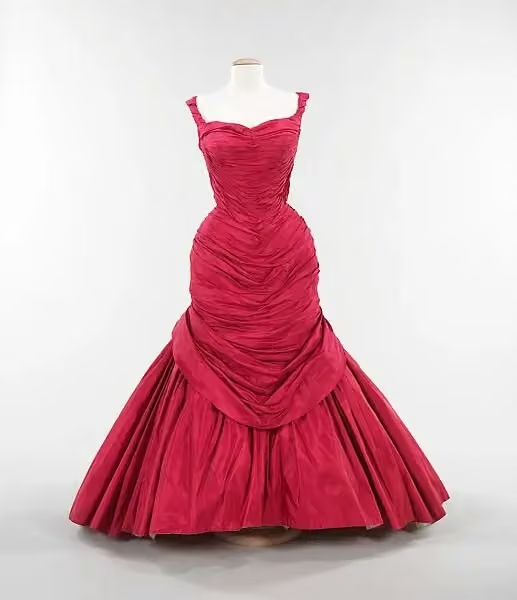
Landmark design
1955
The closely fitted upper body contrasts with a spreading skirt whose concealed colored tulle appears with movement, linking engineering and spectacle.
The Metropolitan Museum of Art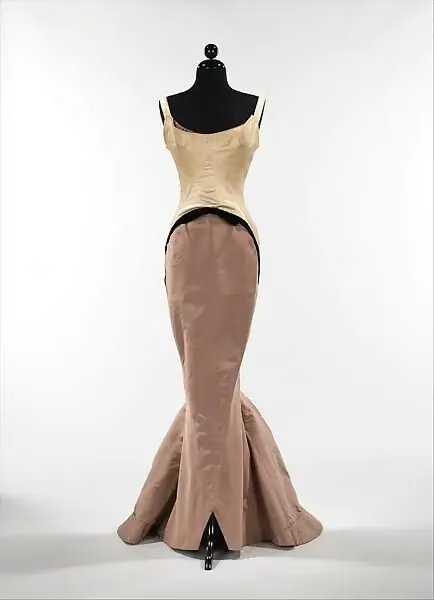
Landmark design
1957
Curving panels and contrasts of sheen sculpt a narrow mermaid silhouette, demonstrating James’s precision beyond his monumental ball gowns.
The Metropolitan Museum of Art1 piece · Season not recorded
Charles James · 1953
1 piece · Season not recorded
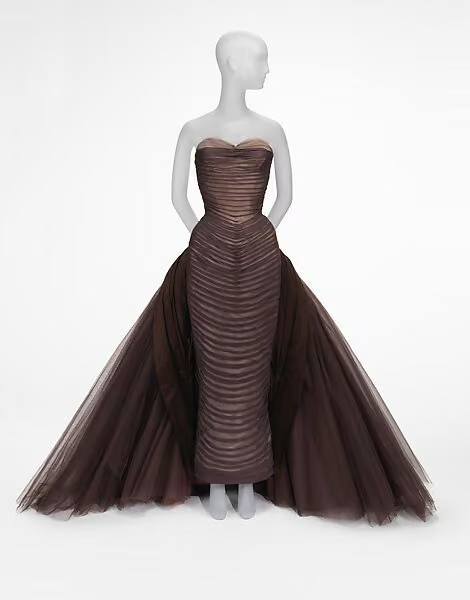
Charles James · ca. 1955
The Met emphasizes his complex seaming, engineered understructures and repeated refinement of silhouettes, qualities visible in the expansive Clover Leaf skirt and the Butterfly gown's elongated body and trailing volume.