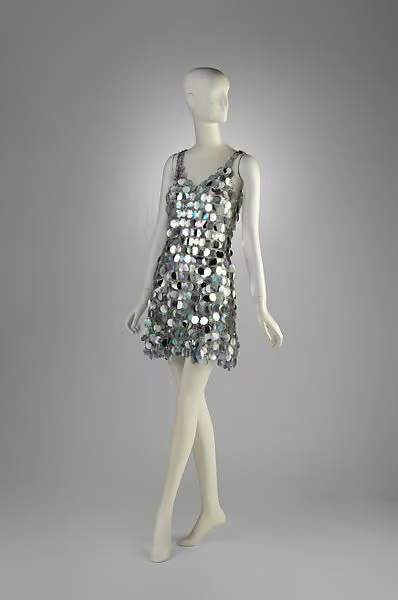
Dress
Paco Rabanne · ca. 1966
Paco Rabanne challenged conventional dressmaking with garments assembled from plastic discs and metal rings. His 1966 presentation, Twelve Unwearable Dresses in Contemporary Materials, made industrial materials central to a futuristic fashion language.
Official house website
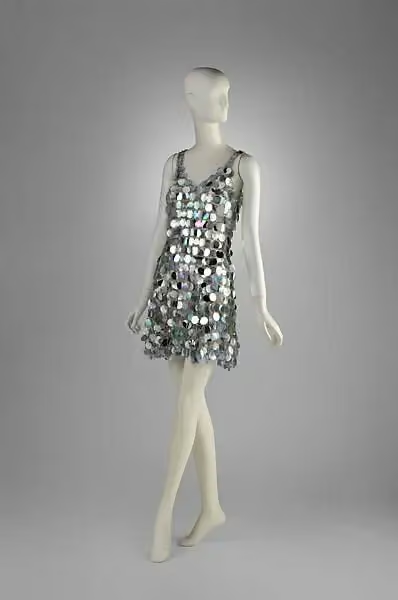
Landmark design
ca. 1966
Plastic discs linked by metal rings make a flexible, shimmering garment—a commercial version of Rabanne’s experiments with unconventional materials.
The Metropolitan Museum of Art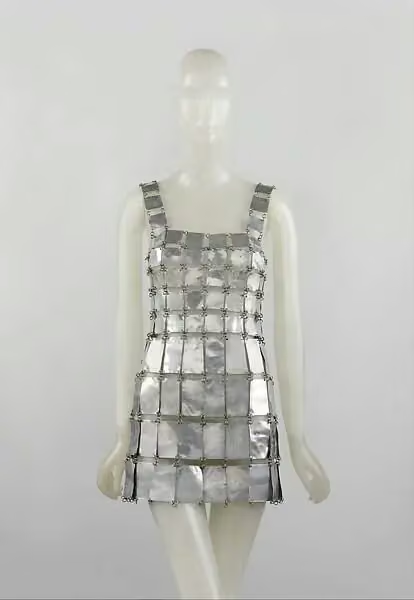
Landmark design
1967
Metal rings join aluminum plates in place of stitched fabric, connecting medieval chain mail to Space Age fashion.
The Metropolitan Museum of Art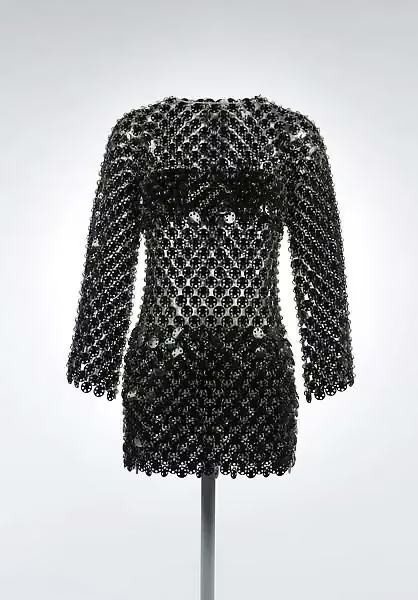
Landmark design
1969
Jewelry-style jump rings link cellulose-acetate discs, while overlapping bands negotiate the design’s transparency.
The Metropolitan Museum of Art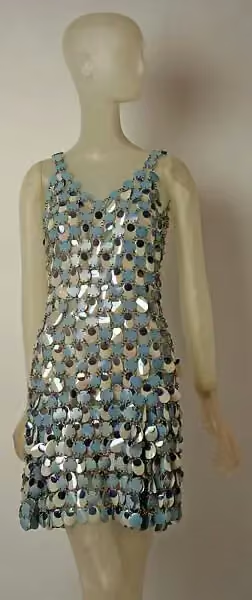
Landmark design
1965
The museum dates this plastic-and-metal evening dress to 1965, documenting Rabanne’s material experiments before his celebrated 1966 collection.
The Metropolitan Museum of Art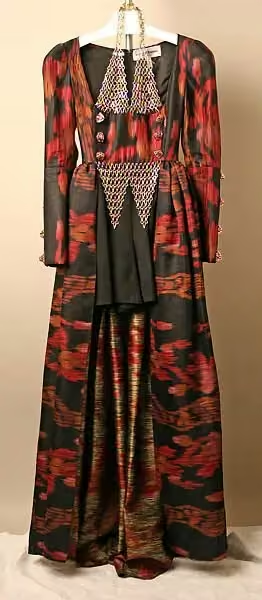
Landmark design
Late 1980s
A later evening dress in synthetic fiber and plastic shows Rabanne’s continued engagement with manufactured materials beyond the Space Age decade.
The Metropolitan Museum of Art1 piece · Season not recorded
Paco Rabanne · ca. 1966
Surviving commercial examples translate those experiments into minidresses whose linked surfaces evoke both chain mail and the space age.
READ FURTHER
The Metropolitan Museum of Art: Dress