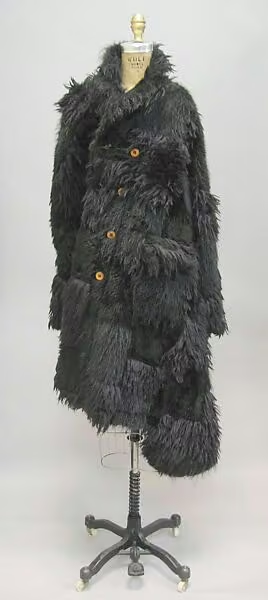
Coat
Rei Kawakubo · fall/winter 2002–3
Rei Kawakubo’s Body Meets Dress—Dress Meets Body made familiar body contours unfamiliar. Her work at Comme des Garçons uses construction, displaced volume and unexpected surfaces to question what a garment should become.
Official website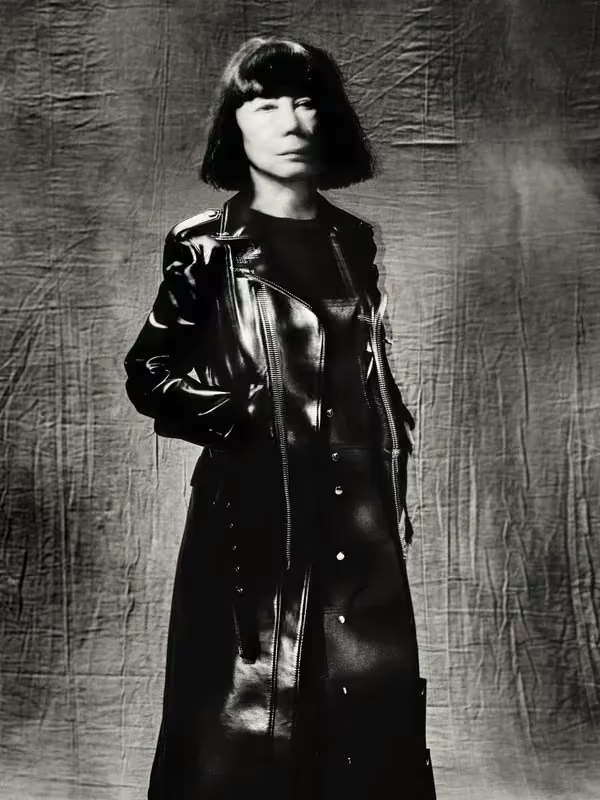
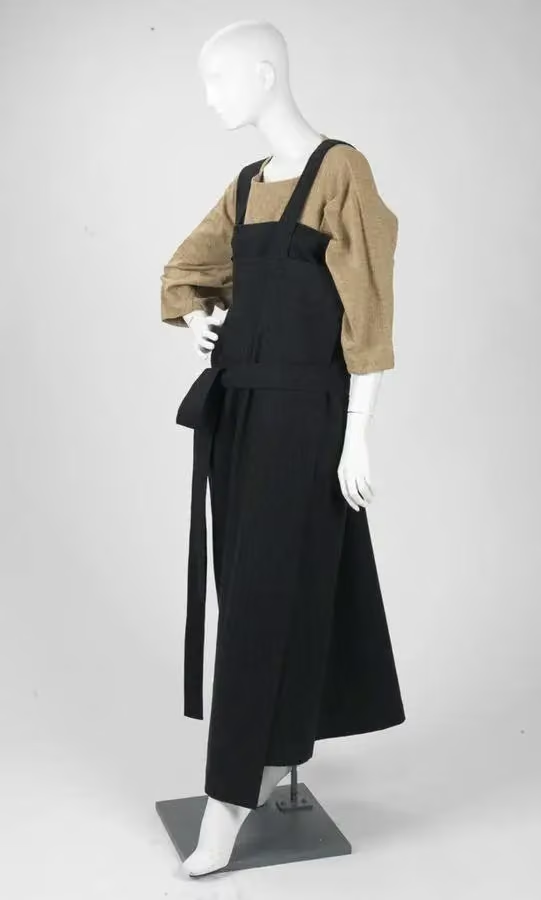
Landmark design
1983–84
A loose black jumper makes the space around the body part of the design, demonstrating Kawakubo’s early alternative to conventional fitted silhouettes.
RISD Museum of Art; photograph by Erik Gould, via Wikimedia Commons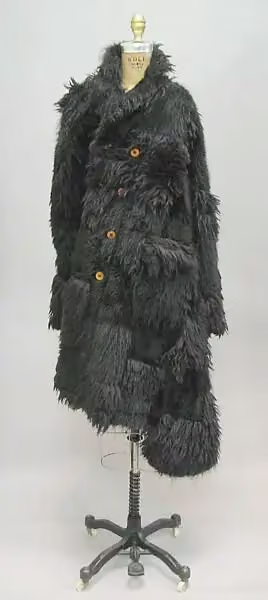
Landmark design
fall/winter 2002–3
Combining faux fur with wool, this coat offers an example of Kawakubo’s material contrasts in outerwear.
The Metropolitan Museum of Art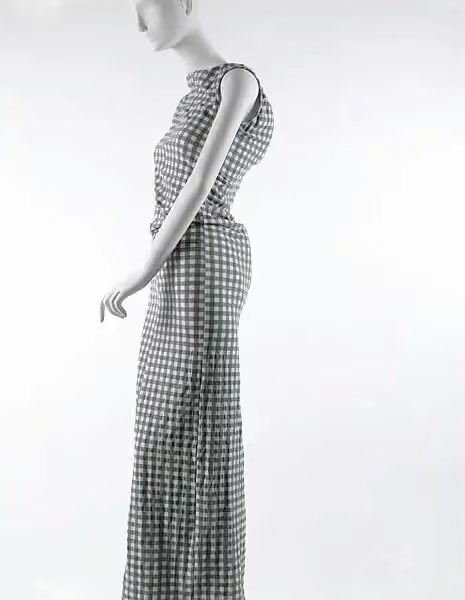
Landmark design
Body Meets Dress—Dress Meets Body, spring/summer 1997
Down padding beneath taut gingham creates new bodily contours and questions the assumption that clothes should preserve an idealized figure.
The Metropolitan Museum of Art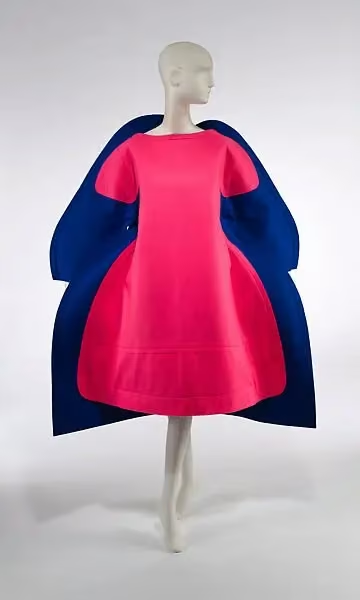
Landmark design
2 Dimensions, fall/winter 2012–13
Flat fabric planes replace conventional shaping, making the clothed figure read as an oversized graphic silhouette.
The Metropolitan Museum of Art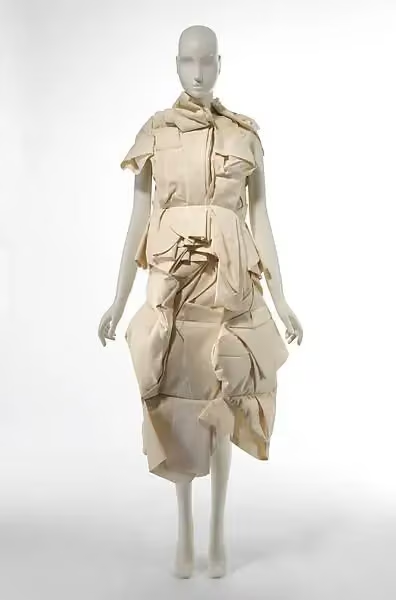
Landmark design
Crush, spring/summer 2013
Folded and stitched cotton toiles turn the provisional materials of garment-making into the finished design.
The Metropolitan Museum of Art2 pieces
Rei Kawakubo · fall/winter 2002–3
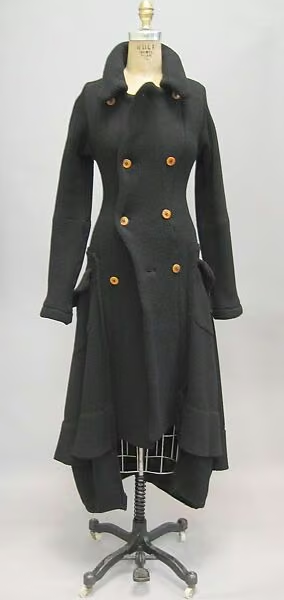
Rei Kawakubo · fall/winter 2002–3
1 piece · Season not recorded
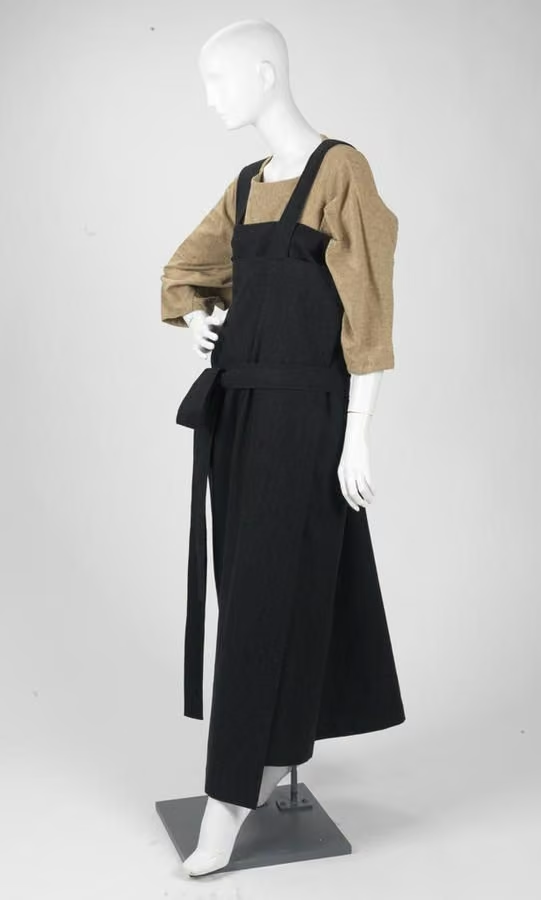
Rei Kawakubo · 1983–84
For spring/summer 1997, Body Meets Dress—Dress Meets Body placed down padding beneath stretch fabrics, including gingham. The resulting curves appeared in unexpected places, so the viewer could no longer easily separate the wearer’s outline from the garment’s added form. The collection’s own title gives a more useful starting point than the derogatory nicknames in some press accounts.
Movement developed the idea further in Scenario, her collaboration with choreographer Merce Cunningham, which premiered in 1997. The costumes altered how bodies occupied space during dance. The later coats indexed here belong to subsequent investigations; their 2002–03 dates should not be treated as evidence of an actual 1980s collection.