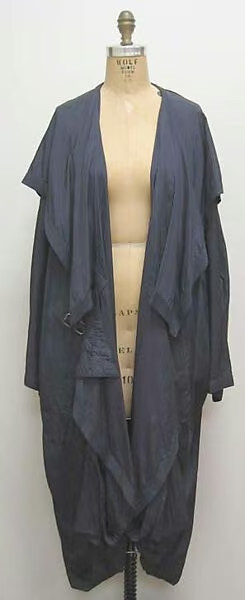
Pocketable Raincoat
Issey Miyake · 1984
Kawakubo, Yamamoto and Miyake each tested familiar expectations of clothing. Their different uses of space, surface and proportion challenged the smoothly finished silhouette.
Issey Miyake · 1984
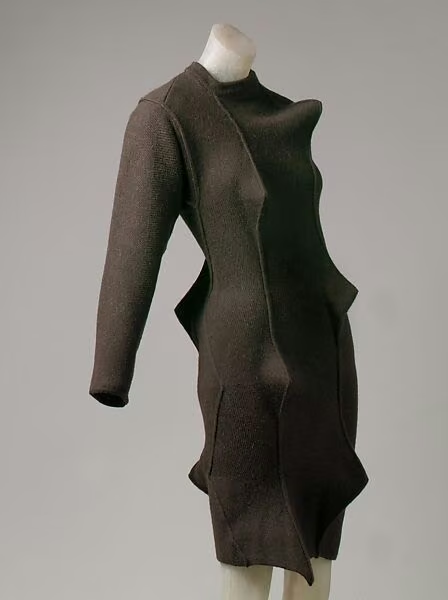
Issey Miyake · 1989
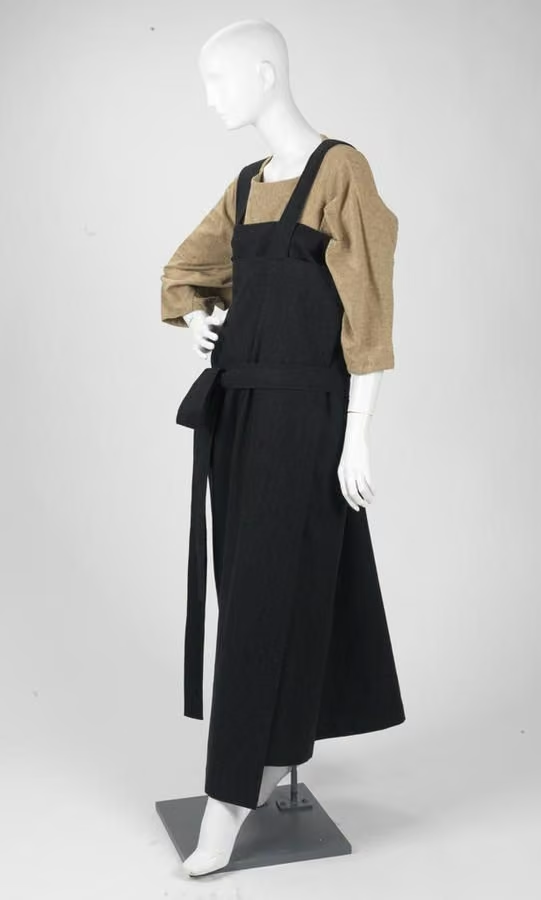
Rei Kawakubo · 1983–84
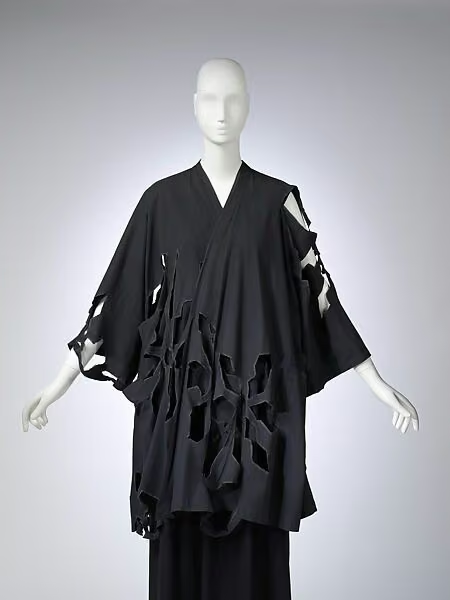
Yohji Yamamoto · spring/summer 1983
Rei Kawakubo, Yohji Yamamoto and Issey Miyake proposed different relationships between cloth and the body. Asymmetry, space around the wearer and textile experiments challenged expectations of a smoothly finished, figure-following garment. Kawakubo’s distressed knits of autumn/winter 1982–83, for example, reconsidered lace through deliberately irregular holes. Miyake’s experiments in form and movement and Yamamoto’s altered proportions offered other approaches. “Japanese avant-garde” is useful here as a historical grouping, not a claim that the designers shared one national aesthetic.
Cloth in motion
Rethinking the familiar
Tradition, taken apart and remade