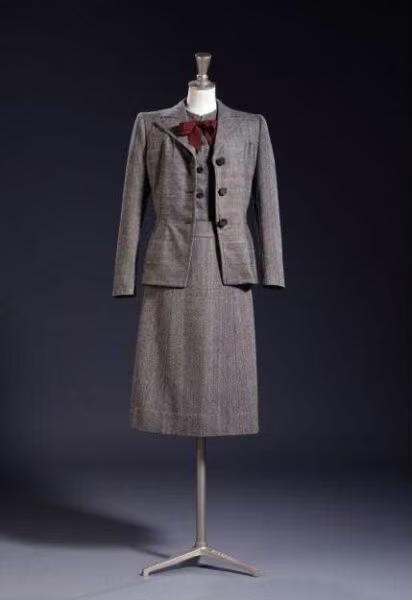
Utility clothing
Economical construction · Practical tailoring · CC41 scheme
Utility, New Look
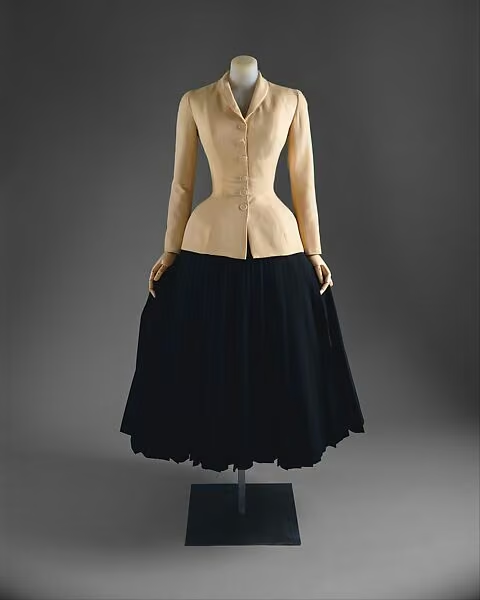
Scarcity and wartime work made practicality urgent; postwar couture proposed new abundance. Utility clothing, American sportswear and the New Look reveal different responses to change.
Economical construction · Practical tailoring · CC41 scheme
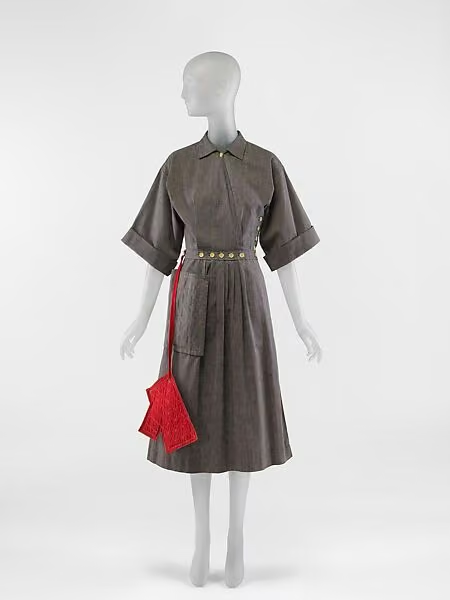
Practical fabrics · Adjustable fit · Freedom of movement
Soft shoulders · Nipped waist · Emphasized hips and full skirts
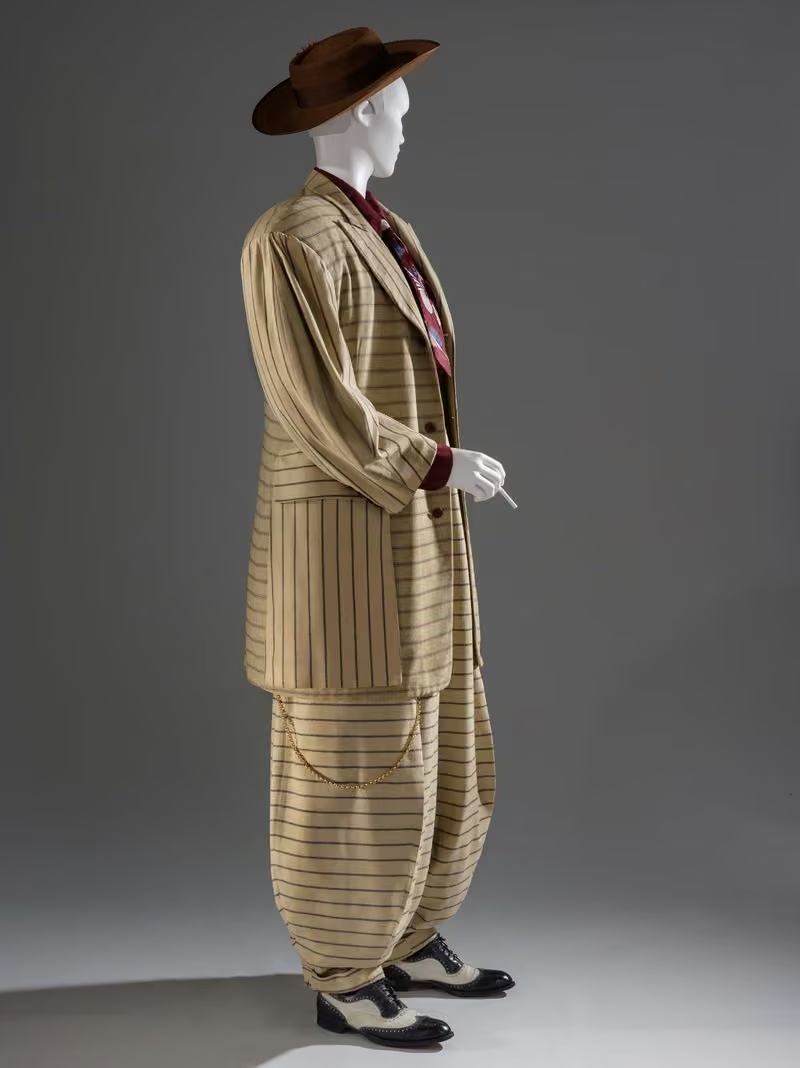
Long, broad-shouldered jackets · High-waisted pegged trousers · Swing-era self-expression
Selected examples dated to this decade.
Digby Morton · autumn 1942
Claire McCardell · 1942
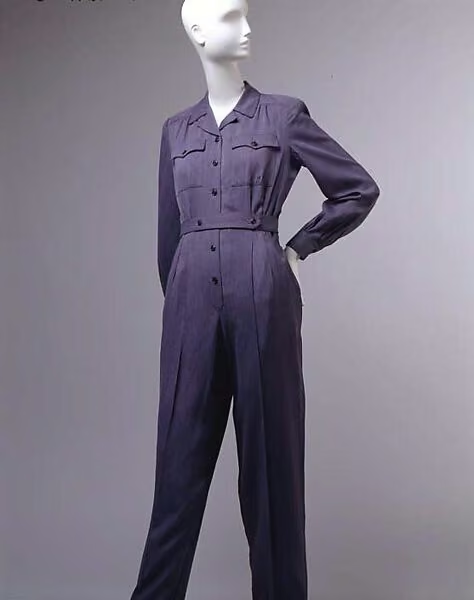
Vera Maxwell · 1942
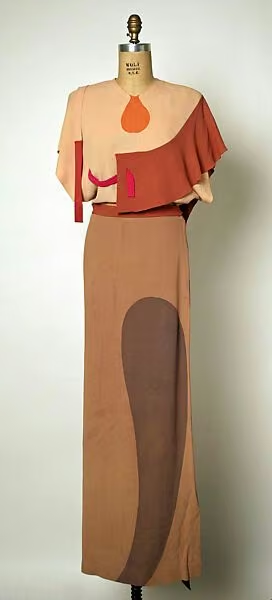
Gilbert Adrian · 1945
Christian Dior · Spring/Summer 1947
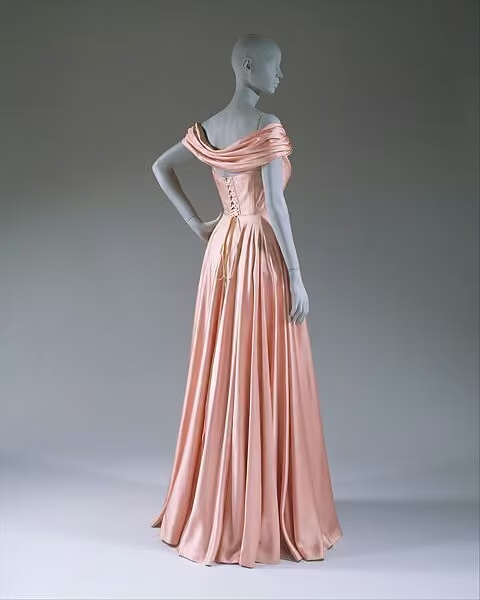
Jacques Fath · spring/summer 1947
1942
Made adaptable sportswear fashionable through wrap dresses, practical pockets and designs that allowed easy movement.
autumn 1942
Designed carefully tailored Utility clothing for Britain’s 1942 programme of economical everyday dress.
1942
Applied sportswear practicality to women’s industrial clothing, including the 1942 Sperry Gyroscope uniform.
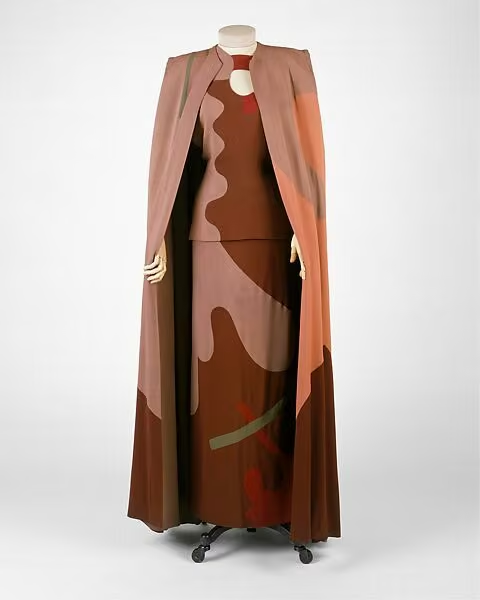
1945
Carried Hollywood’s visual confidence into American fashion, translating modern art into precisely pieced dresses.
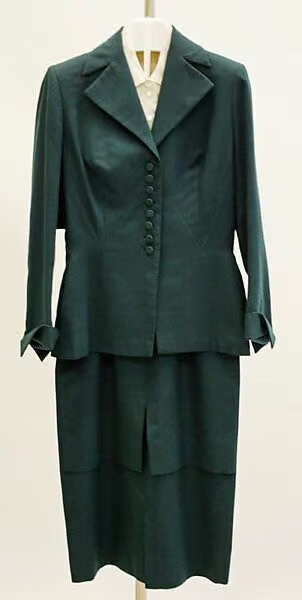
late 1940s
Designed sharply fitted suits for Bullocks Wilshire, using precise jackets and coordinated skirts.
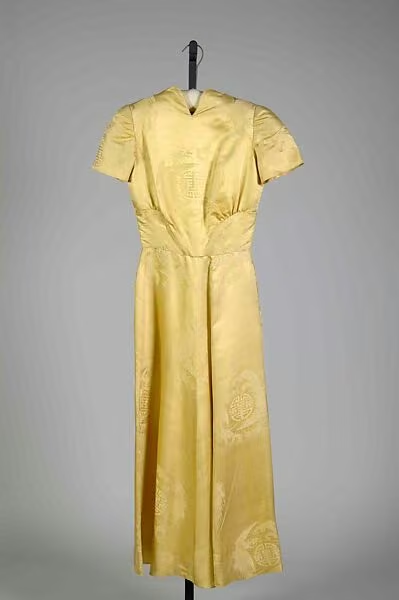
ca. 1948
Brought Paris couture traditions to New York, creating carefully fitted dresses for individual clients.
Spring/Summer 1947
Launched the New Look in 1947, emphasizing shaped hips, narrow waists and generous skirts.
spring/summer 1947
Used visible corset lacing and tightly defined waists to give postwar eveningwear a dramatic structure.
The Second World War shaped clothing through shortages, rationing and the demands of work. In Britain, the Utility scheme made controlled standards of manufacture and price part of everyday dress. In the United States, designers such as Claire McCardell developed practical sportswear for varied activities, helping establish the American Look. After the war, Christian Dior’s 1947 debut made a sharply defined waist and fuller skirt the focus of international attention. The New Look transformed fashionable proportions and continued into the following decade.
Government standards linked clothing quality and price with wartime limits on materials.
Practical ready-to-wear gained prominence as American designers emphasized movement, versatility and women’s changing activities.
Dior’s first collection introduced the New Look, with soft shoulders, a small waist and an emphasized hipline.
Designers active in this decade. Available garment examples may come from another period; their dates are labeled.
Wearable elegance shaped directly in fabric
A tradition of fine dressmaking
Refined Paris couture and award-winning costume design.
Marimekko co-founder, textile artist and creative leader
Useful details become the design
A new silhouette for couture
Design for everyday life
Sculpting the space around the body
Practical tailoring
Handwoven wool · Vivid tweeds · Woven skirts
Modern taste and classical drapery
The expressive printed surface
A founding figure of organized Italian couture
Danish craftsmanship at the heart of Paris couture.
A founding woman of organized Italian couture
Modern art, Hollywood and precise cutting
Graphic textile patterns · Stylised foliage · Fashion illustration
From patterned dresses to leather trousers
American formality with intricate surfaces
An influential couture house led by successive generations of designers.
An aristocratic amateur who became a couturier
Tailoring for the California wardrobe
The waist and the sculptural neckline
The expressive possibilities of draping
Coordinated dressing across occasions
Artistic dress for life at home
An independent voice in American design
A founding woman of organized Italian couture
Couture shaped through creative direction
Couture designed for petite women
Structure made from continuous folds
A painter’s eye for pattern and color
Considered elegance for individual clients
Poised couture with a slender, wearable line.
Ruffles, proportion and tailored line
A founding woman of organized Italian couture
High-end American ready-to-wear with precise tailoring.
The Fontana sisters and Rome’s couture industry
American eveningwear and graphic invention
A Paris house of feminine couture
Formal silk and a defined waist
Refinement in ready-to-wear
Luxurious custom eveningwear before a celebrated career in interiors.
Clear shapes and tactile ornament
Postwar form and embroidered detail
Individual dressmaking · Atelier fashion
Tailored restraint and postwar contrast
Postwar Roman couture and American clients
American leisurewear with textile range
Complex construction with apparent simplicity
Practical clothing and coordinated color
Tailored glamour and a path for Black designers